
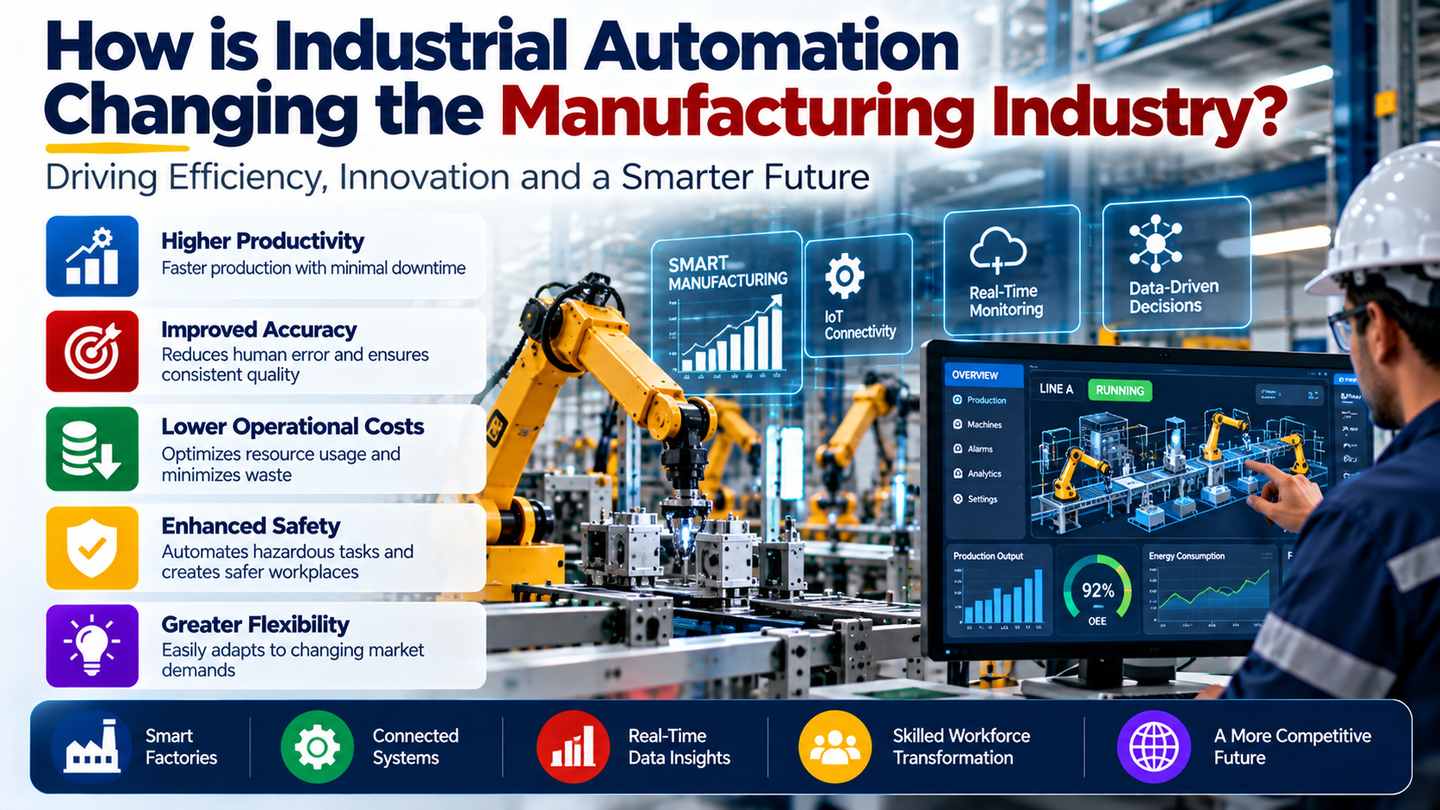
In today’s world, technology is advancing at a rapid pace, and one of the key areas where we see this change is in the manufacturing industry. You might have heard the term industrial automation, but what does it really mean and how is it transforming factories and production processes in India and around the world? Let’s dive into this topic to understand its impact better.
What is Industrial Automation?
Industrial automation refers to the use of machines, control systems, and information technologies to handle different processes and machinery in manufacturing with minimal human intervention. Instead of people manually operating machines, automated systems take over repetitive tasks, ensuring efficiency and precision.
Benefits of Industrial Automation
Increased Efficiency and Productivity
Automated machines can work faster and longer than humans. For example, in an automobile factory, robots can assemble car parts quickly without getting tired, leading to higher production rates.
Improved Quality and Consistency
Automation ensures that products are made with the same quality every time. This reduces the chances of defects. For instance, in the electronics industry, automated systems can place tiny components on
circuit boards with high accuracy, ensuring that each device functions correctly.
Enhanced Safety
Manufacturing can involve dangerous tasks like handling heavy machinery or toxic materials. Automation reduces the need for humans to perform these risky jobs, lowering the chances of accidents and injuries.
Cost Savings
Although setting up automated systems can be expensive initially, in the long run, it saves money by reducing labor costs and minimizing errors that can lead to wasted materials.
Industrial Automation in India
Training: Corporate Training
India’s manufacturing sector is growing rapidly, and industrial automation is playing a crucial role in this expansion. Let’s look at some examples:
Automobile Industry: Major car manufacturers like Maruti Suzuki and Tata Motors use robots to assemble cars. This not only speeds up production but also ensures that each vehicle meets quality standards.
Textile Industry: Automated machines in textile factories help in weaving, dyeing, and stitching fabrics more efficiently than manual methods.
Electronics Manufacturing: Companies like Samsung and Xiaomi use automated systems to produce smartphones and other electronic gadgets, ensuring high precision and speed.
Challenges of Industrial Automation
While automation brings many benefits, it also poses some challenges:
High Initial Investment
Setting up automated systems requires a significant amount of money, which can be a barrier for small and medium-sized enterprises.
Job Displacement
Automation can lead to the reduction of certain jobs as machines take over repetitive tasks. However, it also creates new opportunities in areas like machine maintenance and programming.
Technical Issues
Automated systems can sometimes malfunction, leading to production delays. Regular maintenance and skilled technicians are essential to keep things running smoothly.
The Future of Manufacturing
The future of manufacturing lies in the seamless integration of humans and machines. While machines handle repetitive and dangerous tasks, humans can focus on more creative and strategic roles. Technologies like Artificial Intelligence (AI) and the Internet of Things (IoT) are expected to further revolutionize the industry by making machines smarter and more connected.
Conclusion
Industrial automation is undeniably changing the manufacturing industry by making processes more efficient, improving product quality, enhancing safety, and reducing costs. While there are challenges to overcome, the benefits are substantial and pave the way for a more advanced and productive future. As technology continues to evolve, the manufacturing sector in India and around the world will keep transforming, offering exciting opportunities for innovation and growth.