
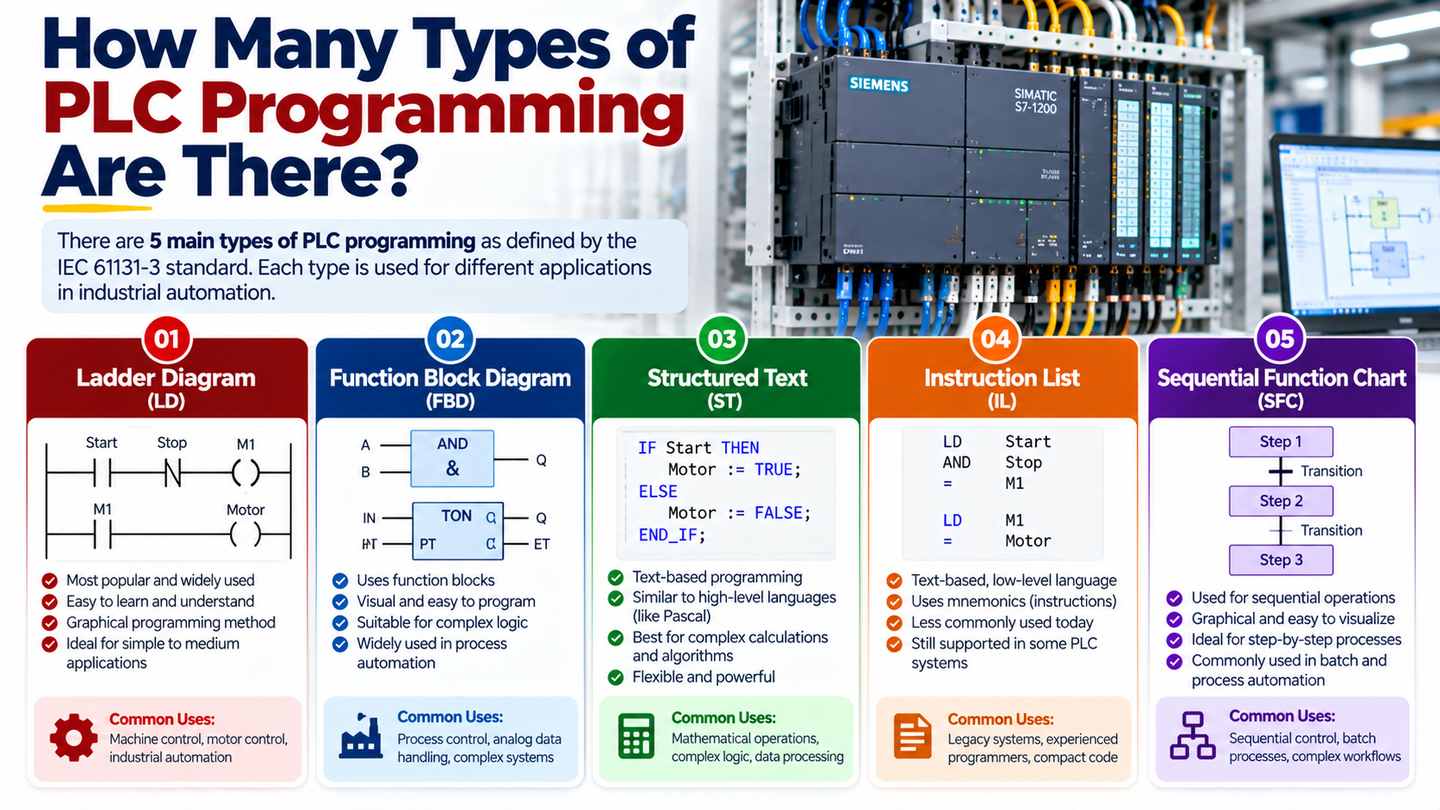
PLC programming is at the heart of automation, transforming industries by controlling machinery and processes with precision. As technology advances, so does the way we program these crucial systems. If you're venturing into this field or simply looking to enhance your knowledge, understanding the various types of PLC programming languages is essential.
Each language has its unique strengths and applications, catering to different needs in industrial settings. Whether you’re a seasoned engineer or just starting out, knowing which type to choose can significantly impact your project’s success. Let’s dive deeper into the world of PLC programming and explore how each language plays a vital role in shaping modern automation solutions.
Types of PLC programming languages
PLC programming languages are essential tools for automation and control systems. They provide a structured approach to designing complex processes in industries.
There are several recognized types of PLC programming languages, each tailored for different applications. These include Ladder Logic, Function Block Diagrams, Structured Text, and Sequential Function Charts.
Each language offers unique advantages that cater to specific project requirements. For example, Ladder Logic mimics electrical relay logic, making it intuitive for electricians and engineers alike. Conversely, Structured Text resembles high-level programming languages like Pascal or C++, appealing to software developers.
Function Block Diagrams present a visual representation of functions which is particularly useful in process control environments. Meanwhile, Sequential Function Charts allow for effective management of sequences in operations.
Choosing the right language can significantly impact the efficiency and clarity of your automation tasks. Understanding these differences is crucial as you dive deeper into PLC programming.
Training:- Corporate Training
Ladder Logic Programming
Ladder Logic Programming is one of the most widely used languages in PLC programming. Its visual representation resembles a ladder, hence the name. This format makes it intuitive for engineers and technicians, especially those familiar with electrical diagrams.
Each rung of the ladder represents a specific operation or function. The left side typically contains power rails, while the right side signifies output devices. This clear layout simplifies troubleshooting and enhances understanding.
With Ladder Logic, users can easily create control systems by connecting various inputs and outputs through logical conditions. It excels in applications involving relay logic and control circuits.
This programming language is highly versatile, making it suitable for industries ranging from manufacturing to process automation. As more professionals embrace this method due to its simplicity and effectiveness, its popularity continues to grow across sectors.
Training:- 6-Month Industrial Training Program
Function Block Diagrams
Function Block Diagrams (FBD) are a graphical programming language used in PLCs. They allow programmers to visualize the control process through interconnected blocks.
Each block represents a specific function, such as logic operations or arithmetic calculations. This modular approach makes it easier to understand complex systems at a glance.
One key advantage of FBD is its ability to facilitate reusability. Once you create a block for a particular function, you can reuse it across different projects without modification. This saves time and effort.
Additionally, FBD supports parallel processing, making it suitable for applications where multiple functions need to operate simultaneously. The visual nature of this programming style also helps teams collaborate more effectively by providing clear documentation of the system's logic.
For those who prefer seeing how components interact visually rather than writing lines of code, Function Block Diagrams offer an intuitive alternative that's both efficient and powerful in automation tasks.
Structured Text Programming
Structured Text Programming (ST) is a high-level programming language used in PLCs. It resembles traditional programming languages like Pascal and C, making it appealing for those with a coding background.
ST allows for complex algorithms to be expressed clearly and efficiently. Its syntax supports various data types, control structures, and functions, providing flexibility when tackling intricate tasks.
One significant advantage of Structured Text is its readability. Programmers can easily understand the logic behind the code without diving into graphical representations. This clarity aids collaboration among team members.
Given its capabilities, ST shines in applications that require extensive calculations or data handling. With structured blocks of code, troubleshooting becomes more manageable as developers pinpoint issues swiftly within their programs.
Sequential Function Chart Programming
Sequential Function Chart (SFC) programming is a graphical method used to design and implement sequential control systems. It allows programmers to visualize the sequence of operations in an organized manner.
In SFC, processes are represented as steps connected by transitions. Each step defines an action or state that the system can be in, while transitions dictate how the system moves from one step to another based on specific conditions.
This language excels in managing complex sequences and offers clarity when multiple tasks must occur simultaneously. Users appreciate its intuitive layout, which makes troubleshooting straightforward.
Industries like manufacturing often utilize SFC for automation projects. The ability to easily depict workflows enhances collaboration among team members, ensuring everyone understands the process flow clearly. This efficiency leads not only to improved productivity but also reduces the likelihood of errors during implementation.
Comparison and benefits of each type
Each PLC programming language offers distinct advantages tailored to different scenarios.
Ladder Logic is intuitive and resembles electrical relay logic. This familiarity makes it easy for technicians to learn quickly, making it ideal for simple control tasks.
Function Block Diagrams allow users to visualize processes in a modular way. They are excellent for complex systems since they break down operations into manageable blocks, enhancing clarity and debugging capability.
Structured Text shines with its high-level syntax similar to traditional programming languages. This flexibility supports advanced algorithms and calculations, perfect for data-heavy applications.
Sequential Function Charts excel in managing sequential control processes. Their flow-based approach helps streamline operations where order matters significantly, like assembly lines or batching systems.
Choosing the right type can enhance efficiency and reduce errors across various projects. Each language caters to specific needs while providing reliable solutions tailored to unique challenges faced by engineers today.
Choosing the right PLC programming language for your project
Selecting the right PLC programming language for your project can significantly impact its success. Start by assessing your specific needs. What kind of automation are you implementing? Different languages excel in various scenarios.
Consider the complexity of your system. If it involves intricate control processes, structured text might be more suitable due to its flexibility and sophistication. For simpler tasks, ladder logic could provide an intuitive approach that’s easy to understand.
Don’t overlook team expertise either. Choose a language familiar to your team members; this can speed up development and reduce errors. The availability of training resources is another factor worth considering.
Think about future scalability. Will your chosen language adapt as technology evolves? Ensuring longevity in your selection will save time and costs down the line. Take these elements into account before making a decision—it’ll pay off in efficiency and effectiveness later on.
Future developments in PLC programming technology
The landscape of PLC programming is evolving rapidly. As industries become more automated, the demand for sophisticated control systems increases. Innovations in technology are driving the development of new programming languages and paradigms that enhance flexibility and efficiency.
One emerging trend is the integration of artificial intelligence (AI) into PLC systems. AI can optimize processes by learning from data patterns, resulting in smarter automation solutions. Additionally, machine learning algorithms could soon enable predictive maintenance, allowing systems to identify issues before they escalate.
Another significant development lies in cloud computing and IoT (Internet of Things). These technologies facilitate remote monitoring and management of PLC systems. With real-time updates and analytics accessible from anywhere, operators gain greater insights into their operations.
Moreover, advancements in user interfaces are making it easier for engineers to program PLCs without extensive coding knowledge. Visual programming tools are becoming more intuitive and accessible, breaking down barriers for new users entering this field.
As we look ahead, embracing these innovations will be crucial for companies wishing to remain competitive in an increasingly automated world. Staying informed about these trends ensures that businesses can leverage the full potential of PLC technology as it continues to develop.