Best PLC SCADA Training in Agra
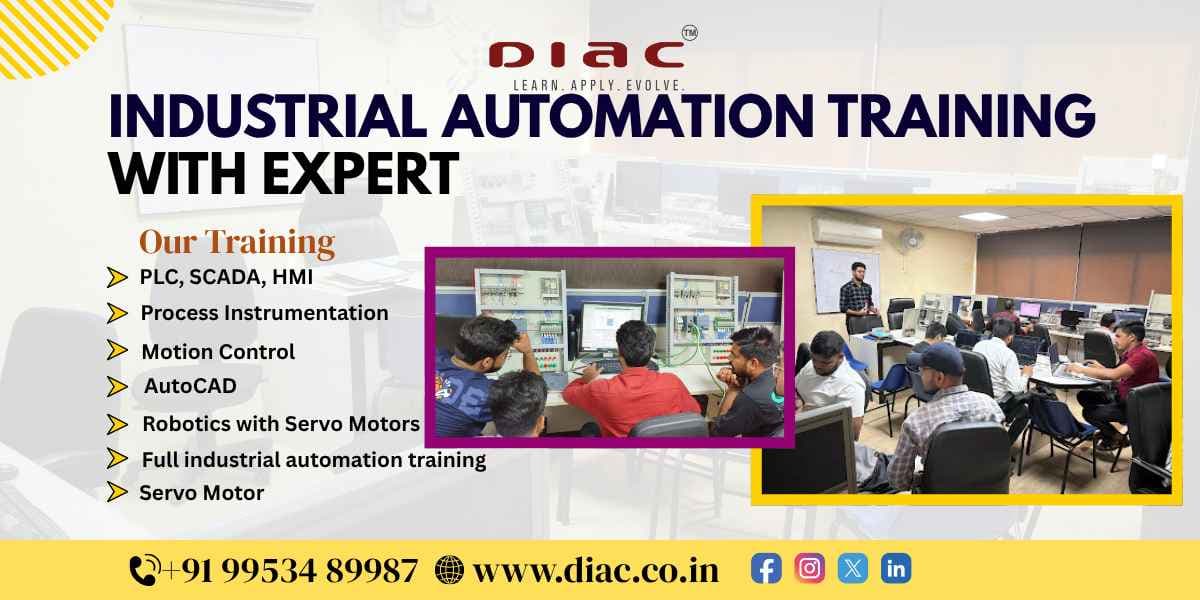
- About PLC SCADA Training and Course
The PLC SCADA Training in Agra is designed to provide an in-depth understanding of programmable logic controllers (PLCs) and supervisory control and data acquisition (SCADA) systems. As automation becomes increasingly critical in industries, PLC programming has become an essential skill for technicians, engineers, and professionals. Enrolling in a PLC programming course not only enhances your technical skills but also opens doors to numerous career opportunities in the field of industrial automation.
At the PLC Training course in Agra, you will gain practical knowledge and hands-on experience with PLC systems. This course covers key areas like PLC programming, circuit design, and SCADA systems. Students will learn how to install, troubleshoot, and maintain PLC systems, making them highly employable in industries such as manufacturing, automotive, and energy.
PLC SCADA Training Overview
The PLC SCADA training in Agra covers a wide range of topics to equip students with the skills needed to excel in the automation industry. Key highlights of the training include:
-
1. PLC Basics: Learn the fundamentals of PLC systems, including programming languages, hardware components, and wiring diagrams.
-
2. Advanced PLC Programming: Get hands-on experience with advanced programming techniques used in real-world applications.
-
3. SCADA Systems: Understand the role of SCADA in monitoring and controlling industrial processes. You'll also learn how to integrate PLCs with SCADA systems for improved efficiency.
-
4. Practical Sessions: Real-life simulations, projects, and troubleshooting exercises allow you to apply your knowledge in a controlled environment.
This comprehensive approach ensures that students not only understand the theory but also develop practical skills that can be directly applied to real-world scenarios.
Benefits of PLC SCADA Training and Course
Investing in PLC SCADA Training in Agra provides several benefits, including:
-
1. Enhanced Career Prospects: Automation is a rapidly growing field, and employers are always looking for trained professionals. Completing a PLC programming course gives you a competitive edge in the job market.
-
2. Hands-On Experience: The training involves practical sessions that prepare you to handle actual PLC systems and SCADA applications in the workplace.
-
3. Industry-Relevant Skills: You will learn the most current techniques and technologies used in industrial automation, ensuring that your skills are up to date.
-
4. Career Flexibility: With the knowledge gained from a PLC Training course in Agra, you can pursue a wide range of job roles in various industries, including control systems engineer, automation technician, or PLC programmer.
Moreover, PLC programming courses near me offer flexibility for local learners who want to stay close to home while gaining world-class training. This makes it easier for you to advance your career without the need for relocation.
Why Choose DIAC Institute for PLC SCADA Training?
DIAC Institute is one of the top providers of PLC SCADA Training in Agra, offering top-notch education and practical training that guarantees success in the automation field. Here's why DIAC stands out:
-
1. Experienced Trainers: DIAC’s instructors are highly qualified and have extensive experience in PLC programming and SCADA systems. They bring real-world expertise to the classroom, ensuring you receive the best training possible.
-
2. State-of-the-Art Facilities: The institute is equipped with modern tools and equipment, providing a hands-on learning environment that mirrors the industry.
-
3. Personalized Attention: DIAC ensures that every student gets individual attention to master the skills needed to excel in PLC programming and SCADA systems.
-
Industry Connections: With strong ties to industry leaders, DIAC offers excellent placement assistance, helping students secure jobs with top companies in automation.
If you're searching for a PLC training course near me, look no further than DIAC Institute in Agra. Their comprehensive approach and industry-focused curriculum will set you up for success in the automation industry.
PLC SCADA Training Scope
The scope of PLC SCADA training is huge and exciting. With automation spreading across various industries, there is a growing need for professionals who can design, implement and maintain PLC and SCADA systems. Here are the key industries that benefit from this training:
Manufacturing
Oil and Gas
Pharmaceuticals
Water and Wastewater Management
Energy and Utilities
Food and Beverage
By doing our training you open doors to many career opportunities including Automation Engineer, PLC Programmer, SCADA System Analyst and more. Our alumni have got placed in top companies and contributing to their success and to the growth of the automation industry.
Course Details
Eligibility: ITI/Diploma/BSc(PCM)/B.tech/MSc(PCM)/M.Tech/Freshers/Professionals
Branch: EE/EN/ECE/EEE/ET/EI/MT
Duration: 180 - 360 hrs
Mode:
• Offline Training/Online Training
• 3-6 Months Job Oriented Training
• 2/4/6 Weeks Summer/Winter Training
• 4-6 Months Internship Training
• Hardware & Software Training
• Fast Track Training
• Customize Training
• College/Corporate Training
• Weekdays/Regular Training
• Weekend Training
Module 1 : PLC Course Content
-
Introduction to PLC & RLC
PLC Programming
World of Industrial automation
Basics of electrical & Electronics Principles & concepts
Logic Gates and Number Systems
PLC fundamentals, Type & Architecture
Selection of PLC Hardware (Inputs / Outputs)
Wiring of PLC – Source and Sink Concepts
Wiring of different field devices to PLC
Addressing and Scheduling of inputs & Outputs
Introduction to PLC Programming Software
Programming using Ladder logic
Downloading and uploading of the application software to PLC
Basic / Advance Instruction
Faultfinding / Troubleshooting & Rectification
Hands on Experience on Real time Industrial applications
Module 2: SCADA Course Content
Introduction to SCADA software
Creating New SCADA Project
Introduction to Graphics and animation
Development & Creation of Tag & Mimic Window
Creating database of Tags
Basic of system and Application
Attaching controls to graphic objects sizing, Blinking, Filling
Analog Entry, Movement of objects, Visibility
Engineering and Fundamentals of Projects
Real time and Historical Trending
Creating Alarms and Events
Application of scripts
Communication with Microsoft application and PLC
Net DDE Communication
Fault finding/Troubleshooting
Module 3 HMI (Human Machine Interface)
Introduction to HMI
Selection of HMI
Applications of HMI
Development & Creation of Tags & Mimic Windows
Downloading/Uploading of programs in HMI
Creating Alarm Messages
Communication with PLC
Development of Real Time projects & Data transfer to a PLC
Module 4 Process Instrumentation
Basic control systems
Transmitters / Sensors used in Industrial applications
Photoelectric, Proximity, Encoders
Temperature Measuring (RTD, Thermocouple, Thermistor) working principle, types, selection guidelines.
Flow Measurement, Working principle, types
Pressure Measurement, Working principle, types
Level Measurement, Working principle, types
Load measurement, Load cells
Solenoid valves, Control valves, Smart transmitters
Instrument transformers (CT, PT)
Closed & Open loop control
Module 5 Motion Control ( Servo Motors & Drives)
AC Motors, Operations & limitations
DC Motors, Operations
Motor Starters: DOL, Star-Delta Drives AC, DC, Stepper, Servo (Theory + Practical).
Hardwired Control
Communication Control
Criteria for Drives Selection
Parameter Programming
Soft starters and their advantages over conventional starters
Module 6: Panel Designing and AutoCAD
Introduction to Panel Designing Software
Introduction to symbols used for Switchgear
Selection of Switchgears
Basics of Control & Power Drawings
Load Management (connected load, running load, load factor)
Indications (Ammeters, Voltmeters, PF & KW meters)
Preparation of General Arrangement Drawing, Bus Bar sizing
Preparation of power & control circuits
General wiring guidelines / practices
Testing - Offline / Online testing of panels
Module 7: PLC NetWorking
Basics of Industrial Networking
Different types of Networking Architecture
Importance of Networking in Automation
Basics of Node, Port, Drivers, Topologies
Different Industrial Network: DH-485P, Ethernet IP, Device Net, Control Net, Modbus, Profibus & Profinet
Hands on experience on Networking of PLC
Module 8: Introduction to LT Switchgear
Introduction to Electrical switchgears & accessories
Push Button, Switches, Contactors, Overload Relays, MCB, MCCB, Isolators
Use of Switchgears & control in panel design
Selection & co-ordination criteria of Switchgear
Module 9: Robotics Using Servo Motors
Basics of Servo Motors
Methods
Application of Servo Motors
Question of Calculation
Servo Tuning
Basics & Advance Instructions
Real Time Application
*Note: also available custom course
Join DIAC Today
Take the first step towards a rewarding career in the exciting field of industrial automation and robotics.