
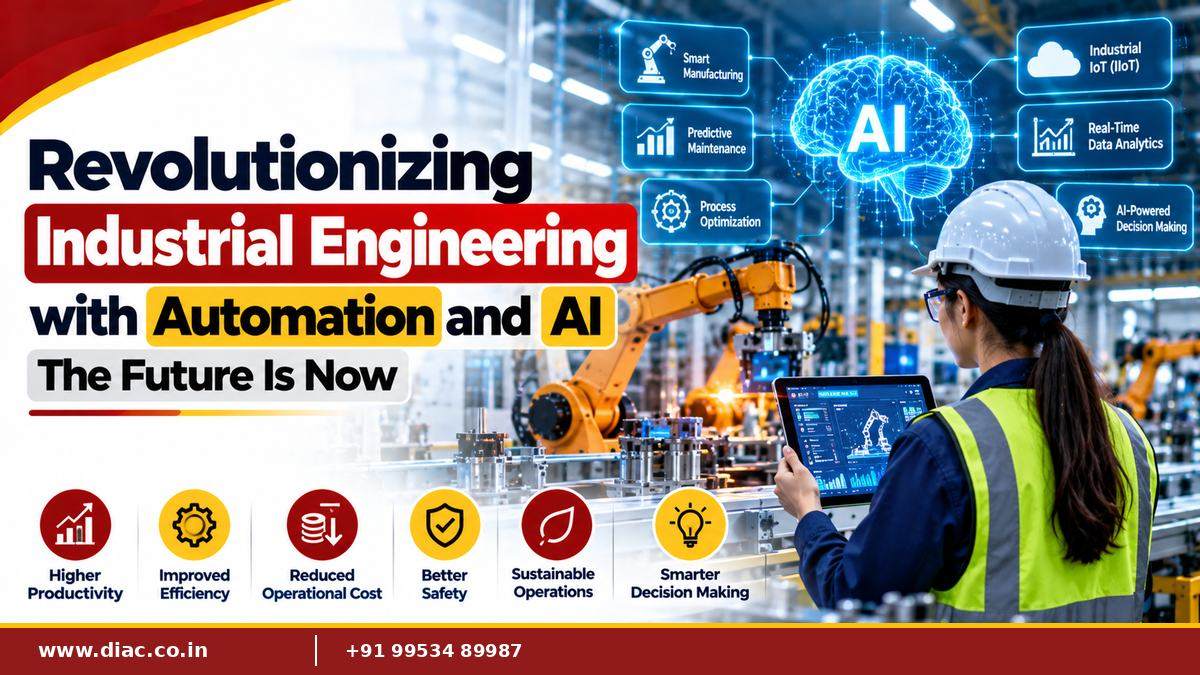
Revolutionizing Industrial Engineering with Automation and AI
The Future of Industrial Engineering Is Now
Industrial engineering is undergoing a radical transformation. Automation and AI are now central to this change. These technologies drive efficiency, cut costs, and improve productivity across all sectors.
Why Automation Matters in Industrial Systems
Automation reduces human error. It boosts precision and speeds up production. Robots and intelligent machines perform repetitive tasks tirelessly. As a result, businesses see faster turnaround times and fewer defects.
Moreover, automation ensures consistency. Machines follow exact specifications. This guarantees quality control throughout manufacturing processes.
Artificial Intelligence Is Driving Smart Decisions
AI adds intelligence to industrial systems. It enables machines to learn, predict, and adapt. Through data analysis, AI identifies patterns invisible to humans. These insights lead to faster and smarter decisions.
From predictive maintenance to supply chain optimization, AI reshapes operations. Equipment alerts managers before failures happen. Delays are avoided, and downtime is reduced.
Integration of AI and Automation
When AI and automation combine, results multiply. Smart factories use interconnected systems. Sensors, AI software, and robotics work as one.
This integration enables real-time monitoring. Engineers receive updates on performance and errors instantly. Adjustments happen automatically, improving efficiency across the board.
Training: Industrial Automation Course
Benefits Across Industries
Almost every industry benefits from this shift. In automotive manufacturing, AI-powered robots build with unmatched speed. In food processing, smart systems detect quality issues instantly. Even logistics firms now use automated warehouses and AI for route planning.
Healthcare and pharmaceuticals also embrace automation. Machines now handle delicate processes like packaging and labeling with precision.
Improved Worker Safety and Job Evolution
Automation reduces human exposure to hazardous environments. AI-driven robots handle dangerous tasks, keeping workers safe.
Contrary to fear, AI and automation don’t replace workers. Instead, they evolve jobs. Engineers now supervise systems and manage operations rather than perform repetitive tasks.
Challenges and Considerations
Adopting AI and automation isn’t without hurdles. High upfront costs, integration issues, and staff training are common concerns. However, long-term benefits outweigh initial investments. Planning, support, and skilled teams make transitions smoother.
The Role of Industrial Engineers in a Smart World
Today’s industrial engineers are not just problem-solvers. They are tech strategists. Understanding AI systems and automation tools is crucial.
They work closely with data scientists and software developers. This collaboration ensures systems run smoothly and goals are met efficiently.
Sustainable Manufacturing with Smart Technologies
AI and automation also support sustainability. Smart systems reduce waste and energy use. Sensors track material consumption in real time. This data helps companies become greener and more responsible.